Each administrator account on the platform can be assigned one or more roles that define what they can see and do. You can also grant individual permissions on top of a role for more granular control.
Before You Start
The administrator account must already exist before you can configure its permissions. See How to Create an Administrator if you haven't done this yet.
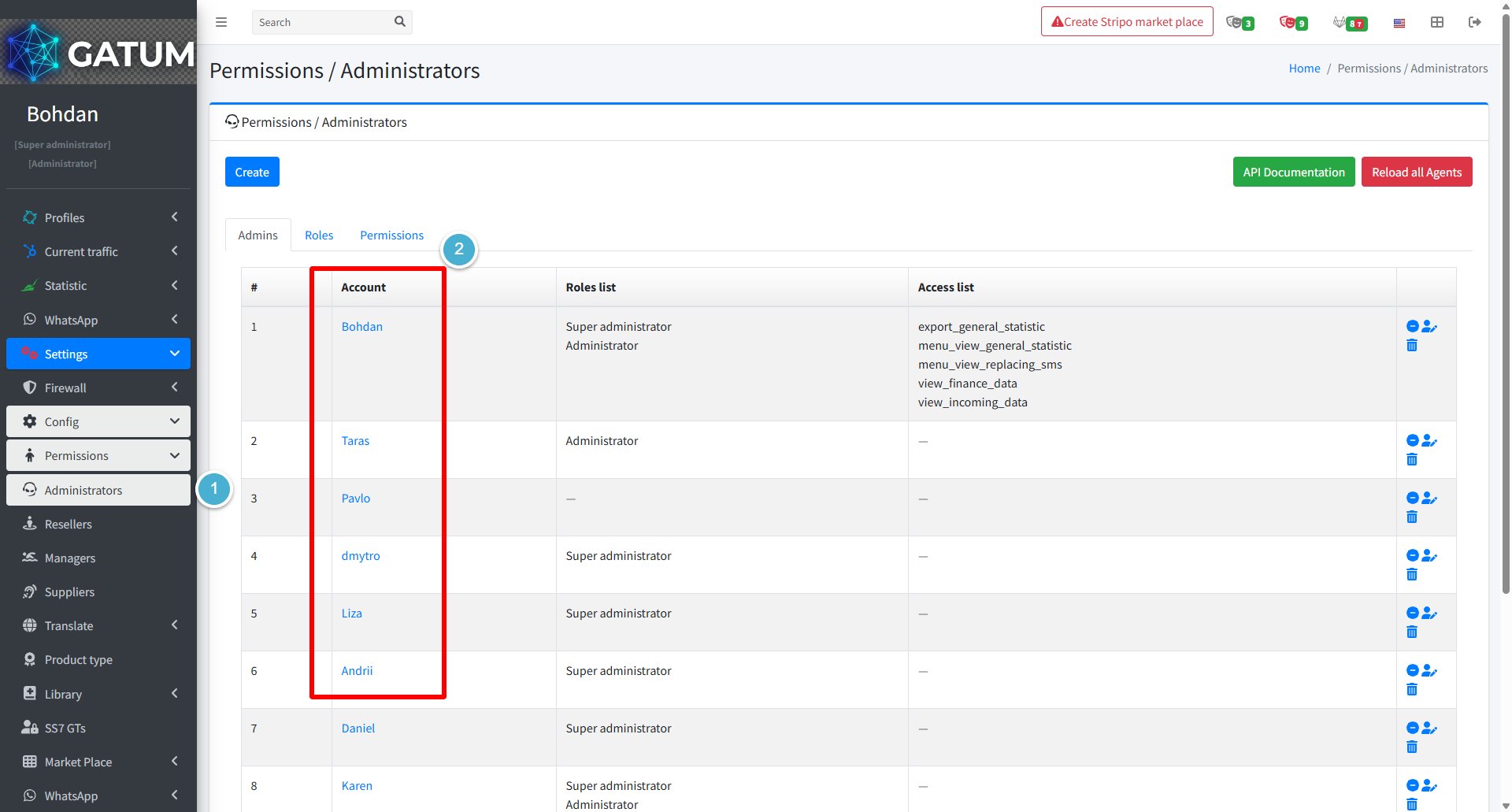
Go to Settings → Config → Permissions → Administrators.
Click the administrator's name to open their permissions page.
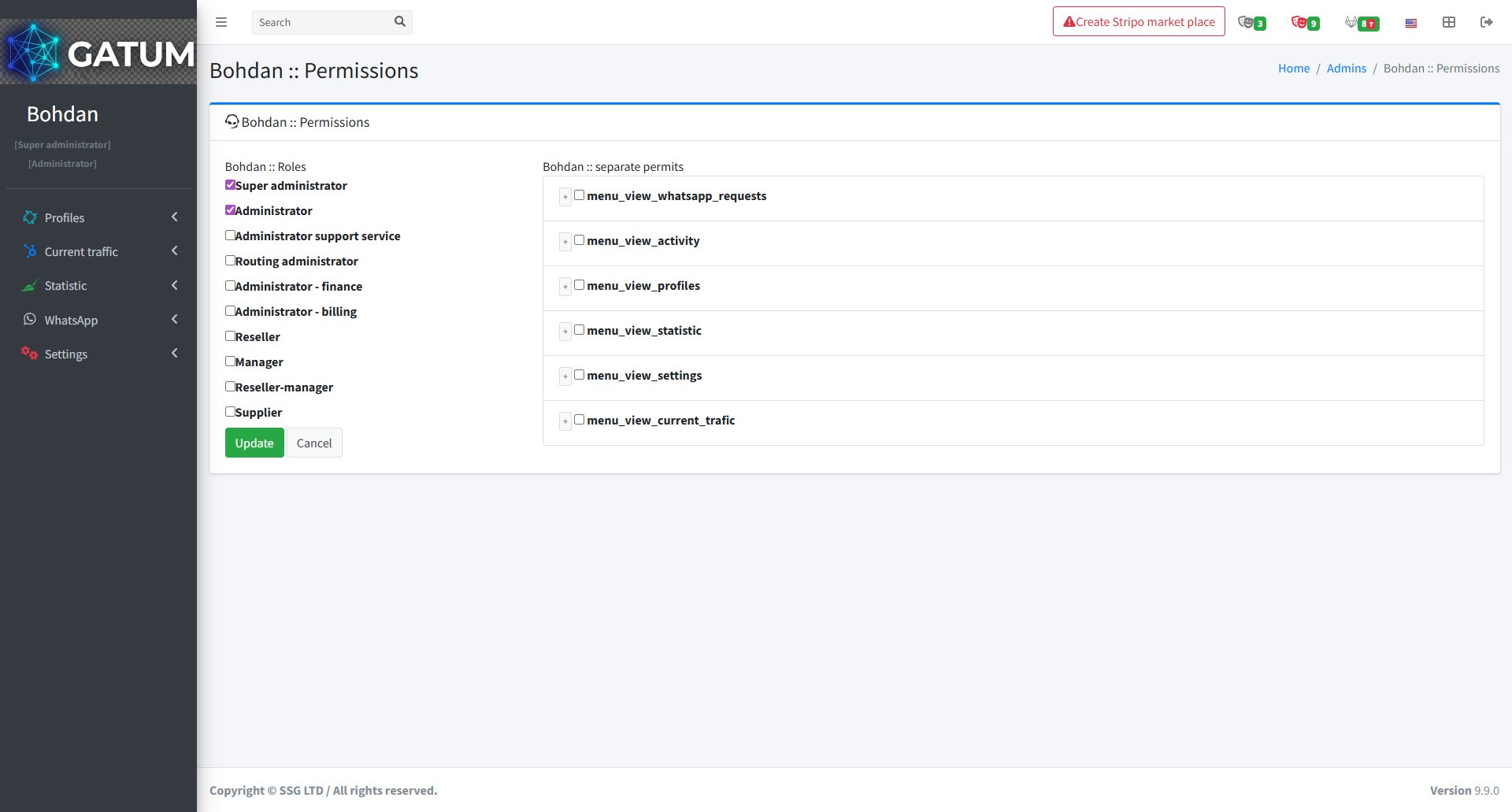
In the window that opens:
The page has two sections. Roles – preset access templates. Check one or more roles to grant the corresponding set of permissions at once.
Role
Access level
Super administrator
Full access to all platform features.
Administrator
Full operational access, excluding super-admin-only settings.
Administrator support service
Access to client-facing support tools.
Routing administrator
Access to routing configuration.
Administrator – finance
Access to financial data and billing tools.
Administrator – billing
Access to invoice and billing management.
Reseller
Access to reseller-level features.
Manager
Access to client and traffic management.
Reseller-manager
Combined reseller and manager access.
Supplier
Access to supplier-related features.
Separate permits – individual permissions that can be added on top of a role. Each permit can be expanded with the + button to see the specific actions it covers. Enable only the permits the administrator needs beyond their assigned role.
Click Update.
The permissions take effect immediately. To review the roles and access list currently assigned to all administrators at a glance, open the Permissions tab on the Administrators page.
When a message is held for review instead of being sent immediately, it means it was caught by one of the platform's moderation mechanisms. Understanding why this happens helps you manage traffic more effectively and configure moderation to match your workflow.
Reason 1:...
Why do SIDs get moderated, and how to set it up?
Sender ID moderation lets you control which sender names your clients can use. When it's enabled, a client can't send SMS with a new sender until you approve it. This helps you keep traffic clean and avoid unexpected sender names going out.
Go...
Why Do SMS Get Into the Waiting List?
When there is not enough balance to send all messages in a campaign, the platform automatically moves the unsent SMS to the Waiting SMS queue instead of dropping them. Once you top up your balance, you can resend them manually.
For example, if...
Cookie declaration last updated on 01/01/2025
This website uses cookies
We use cookies to enhance your browsing experience, provide social media features, and analyze our traffic.
You consent to our cookies if you continue to use our website.